Showing posts with label core strength training. Show all posts
Showing posts with label core strength training. Show all posts
Get Ripped Abs with the Ultimate Core Workout
Are you ready for a full body workout that will strengthen your core and give you six pack abs? A strong core is key to better performance, and we’ll show you where to start if you’re stuck busting abdominal muscles and seeking muscle growth.

Believe it or not, you can build rock-solid core strength without standing one-legged on a ball while pressing pink dumbbells. A century or so ago, practically every guy who trained with weights had a strong core, which he got without using New Age equipment, doing hundreds of crunches, or joining a Pilates class. It's time you learned the truth about what the core is and how it should be trained for health, performance, and eye-popping abs.
All work together, often simultaneously, to stabilize and support the spine. Since the spinal cord is the main avenue for sending messages to the muscles throughout your body, the safer your body senses that it is, the more comfortable it feels sending those messages out and the more clearly they are received.
Building a strong core is the first step toward making maximal gains in strength and power and performing any kind of skilled athletic movement. Strong supporting muscles around the spine also reduce lower-back pain, as well as the risk for lower-back injury. Finally, since the core encompasses all the abdominal muscles that make up that aesthetic six-pack look, it's the foundation of a ripped midsection (though you may need to clean up your diet to see it).
Nevertheless, a well-defined set of abs does not mean a strong core. So how can you tell if your core is in shape? One of the most basic, easy, and effective methods to test core strength is the plank. If you've ever taken a yoga class (or listened to your lady talk about one), this move should be familiar. Simply get down on your hands and knees as if you were about to perform a pushup, then bend your elbows 90 degrees so that you're resting your forearms flat on the floor.
Keep your eyes focused on the floor and your hips braced—your body should form one straight line. Hold the position for as long as you can. (As time elapses, you'll feel all the above-mentioned core muscles squeezing.) If you can hold the plank for two minutes or more without breaking form or experiencing pain, your core is reasonably strong. If you can only hold the plank for between one and two minutes, practice it whenever you get a chance and work to improve it over time. Also, limit the loads you use in your training, and concentrate more on body-weight exercises.
Start using more one-legged exercises in your workouts, and concentrate on keeping perfect form throughout. Do not attempt any heavy lifts until your plank time improves drastically.
Beware: If your core is weak, you not only severely compromise the amount of strength and muscle you can build in your workouts, but you also risk serious injury lifting heavy weights or doing any exercise that loads the lower back.Take our core training tips seriously, and you'll ensure safe and steady progress for as long as you train.
So, in essence, just performing these exercises alone provides a great core workout. Though neither a Swiss or Bosu ball is absolutely necessary for a fully developed core, each can be a highly useful tool that you can work in as a supplement to your main lifts. If you have a pre-existing lower-back problem, a Swiss ball might allow you to train your abs without aggravating it. The ball also allows you to move through a greater range of motion than a crunch done on the floor would. Furthermore, you can perform certain upper-body exercises on it, such as chest presses, which will fire up the core and prepare you for stronger benching when you return to the conventional bench press.
Bosu balls work in much the same way but have a fl at side that makes stabilizing yourself a bit easier. The problem and danger of training your core with either piece of equipment comes when you overdo it (and most people do). Doing crunches only on a Swiss ball overdevelops some of your core muscles while neglecting others, leading to a slew of imbalances that can cause injury and pain. Training with the compound movements described earlier eliminates this risk, as your entire core is trained evenly. (You also get the added benefit of training your other major muscle groups, making the most of your workout time.)
Certainly the most ridiculous trend in core training, and abuse of its equipment, has been the notion that you should perform all your exercises on the Bosu ball. The theory behind this is that your core will work harder as your body struggles to balance itself on top of the ball. While this kind of training does make any movement more difficult to perform, it prevents you from using anything approximating a heavy weight, so your muscles go unchallenged.
You won't build any muscle or strength this way, and your core will never be conditioned to handle the stresses of tough workouts or sports. Unless you're training to improve your performance during an earthquake, exercising on an unstable surface offers no real advantages.Ultimately, doing so will leave you weaker and more at risk for injury. To truly tax your core, keep your feet on a stable surface, and train with time-proven simple exercises such as those given here.
A steady regimen of multi-joint, freeweight exercises like the squat and deadlift should build your core along with the rest of your body, but these supplemental core exercises are what you need to truly pass the plank test. Learn them all and cycle them in and out of your workouts from now on.


Source: http://www.mensfitness.com/training/build-muscle/core-ultimate-workout
Believe it or not, you can build rock-solid core strength without standing one-legged on a ball while pressing pink dumbbells. A century or so ago, practically every guy who trained with weights had a strong core, which he got without using New Age equipment, doing hundreds of crunches, or joining a Pilates class. It's time you learned the truth about what the core is and how it should be trained for health, performance, and eye-popping abs.
Core Concepts
Though commonly used to refer to the abs and lower-back muscles collectively (considered the epicenter of the body ), the term "core" actually applies to several muscles throughout the upper and lower body. The transverse abdominis, rectus abdominis (your six-pack muscle), internal obliques, multifidus, spinal erectors, lats, glutes, and traps can be considered core muscles.All work together, often simultaneously, to stabilize and support the spine. Since the spinal cord is the main avenue for sending messages to the muscles throughout your body, the safer your body senses that it is, the more comfortable it feels sending those messages out and the more clearly they are received.
Building a strong core is the first step toward making maximal gains in strength and power and performing any kind of skilled athletic movement. Strong supporting muscles around the spine also reduce lower-back pain, as well as the risk for lower-back injury. Finally, since the core encompasses all the abdominal muscles that make up that aesthetic six-pack look, it's the foundation of a ripped midsection (though you may need to clean up your diet to see it).
Nevertheless, a well-defined set of abs does not mean a strong core. So how can you tell if your core is in shape? One of the most basic, easy, and effective methods to test core strength is the plank. If you've ever taken a yoga class (or listened to your lady talk about one), this move should be familiar. Simply get down on your hands and knees as if you were about to perform a pushup, then bend your elbows 90 degrees so that you're resting your forearms flat on the floor.
Keep your eyes focused on the floor and your hips braced—your body should form one straight line. Hold the position for as long as you can. (As time elapses, you'll feel all the above-mentioned core muscles squeezing.) If you can hold the plank for two minutes or more without breaking form or experiencing pain, your core is reasonably strong. If you can only hold the plank for between one and two minutes, practice it whenever you get a chance and work to improve it over time. Also, limit the loads you use in your training, and concentrate more on body-weight exercises.
Start using more one-legged exercises in your workouts, and concentrate on keeping perfect form throughout. Do not attempt any heavy lifts until your plank time improves drastically.
Beware: If your core is weak, you not only severely compromise the amount of strength and muscle you can build in your workouts, but you also risk serious injury lifting heavy weights or doing any exercise that loads the lower back.Take our core training tips seriously, and you'll ensure safe and steady progress for as long as you train.
Hard Core Training
When trainers test their clients' core strength, the ones who perform best are almost always the strongest squatters and deadlifters. This is not by accident. Squats and deadlifts—but also shoulder presses, chinups, lunges, and a host of other compound, free-weight exercises (some of which are discussed later)—demand that the core muscles clamp down hard to support the spine under heavy loads. The core keeps your back upright whenever there's a bar resting on it or being pressed overhead, and it prevents your spine from rotating when you have a load pulling you to one side (as in a dumbbell lunge or one-armed press).So, in essence, just performing these exercises alone provides a great core workout. Though neither a Swiss or Bosu ball is absolutely necessary for a fully developed core, each can be a highly useful tool that you can work in as a supplement to your main lifts. If you have a pre-existing lower-back problem, a Swiss ball might allow you to train your abs without aggravating it. The ball also allows you to move through a greater range of motion than a crunch done on the floor would. Furthermore, you can perform certain upper-body exercises on it, such as chest presses, which will fire up the core and prepare you for stronger benching when you return to the conventional bench press.
Bosu balls work in much the same way but have a fl at side that makes stabilizing yourself a bit easier. The problem and danger of training your core with either piece of equipment comes when you overdo it (and most people do). Doing crunches only on a Swiss ball overdevelops some of your core muscles while neglecting others, leading to a slew of imbalances that can cause injury and pain. Training with the compound movements described earlier eliminates this risk, as your entire core is trained evenly. (You also get the added benefit of training your other major muscle groups, making the most of your workout time.)
Certainly the most ridiculous trend in core training, and abuse of its equipment, has been the notion that you should perform all your exercises on the Bosu ball. The theory behind this is that your core will work harder as your body struggles to balance itself on top of the ball. While this kind of training does make any movement more difficult to perform, it prevents you from using anything approximating a heavy weight, so your muscles go unchallenged.
You won't build any muscle or strength this way, and your core will never be conditioned to handle the stresses of tough workouts or sports. Unless you're training to improve your performance during an earthquake, exercising on an unstable surface offers no real advantages.Ultimately, doing so will leave you weaker and more at risk for injury. To truly tax your core, keep your feet on a stable surface, and train with time-proven simple exercises such as those given here.
All The Right Moves
Situps are fine, but these are the core exercises you really ought to be doing.A steady regimen of multi-joint, freeweight exercises like the squat and deadlift should build your core along with the rest of your body, but these supplemental core exercises are what you need to truly pass the plank test. Learn them all and cycle them in and out of your workouts from now on.
A1, A2 PLATE RAISES
Stand with knees slightly bent and hold a weight plate in front of your hips. Keeping your arms straight, slowly raise the plate in front of you until it's at shoulder level, and then lower it back down. That's one rep. Perform 2 - 3 sets of 8 - 12 reps, resting 60 - 90 seconds between sets. Make sure you keep perfect posture—shoulders back and chest out—the entire time.B1, B2 ONE-LEGGED DUMBBELL ROWS
Hold a dumbbell in one hand and stand on the opposite leg. Keeping your lower back in its natural arch, bend forward at the hips until your torso is about 45 degrees to the floor. Row the weight to the outside of your chest, and lower it back down. That's one rep. Perform 2 - 3 sets of 8 - 12 reps on each side, resting 60 - 90 seconds between sets.C1, C2 SUITCASE SQUATS
Hold a dumbbell in one hand at your side and squat as low as you can, as if you were putting down a suitcase. Perform 2 - 3 sets of 8 - 12 reps on each side, resting 60 - 90 seconds between sets.OVERHEAD SQUATS AND LUNGES
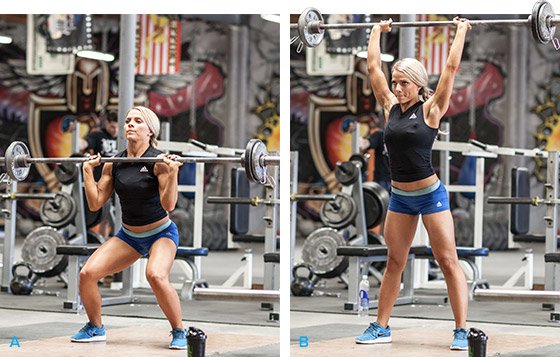
You can do these with either a barbell or dumbbells. Simply hold the weight at arm's length overhead and squat or lunge. Perform 2 - 3 sets of 8 - 12 reps, resting 60 - 90 seconds between sets.ONE-LEGGED SQUATS
Raise one leg out in front of you and squat as low as you can. Perform 2 - 3 sets of 8 - 12 reps on each leg, resting 60 - 90 seconds between sets.Source: http://www.mensfitness.com/training/build-muscle/core-ultimate-workout
Core Strength Training Workouts
Your core provides strength and stability for the rest of your body, which is why it is important to develop these muscle groups. The core not only consists of the rectus abdominis and transverse abdominis, better known as the abdominal muscles, but it also includes the obliques, lower-back and glutes. A great core workout needs to address each area and from multiple angles to get a toned six-pack and a powerful midsection.

Source: http://www.livestrong.com/article/140676-core-strength-training-workouts/
Crunches
While crunches shouldn't be the only exercise that your core workout plan consists of, the basic crunch, and modifications of it to add difficulty, is a good starting point to target the abdominal muscles. Begin by lying on your back with your feet flat on the ground and your knees bent. Your heels should be about 12 inches from your bottom. Put your hands behind your head and keep your elbows out to the sides. Engage your abs to curl your head and shoulders off of the ground and lift your torso toward your knees until your upper back is off the ground. Slowly lower your torso back to the ground to complete one rep. Extend your arms over your head to make the exercise more difficult. Do two to three sets of 10 to 12 reps with 45 to 60 seconds of rest between each set.Standing Cable Rotation
The standing cable rotation works many of the core muscle groups including the abs, obliques and lower back with it's side-to-side, twisting motion. This exercise needs to be done with a piece of resistance tubing or cable machine. Start with your feet hip-width apart, standing alongside either the cable machine or the resistance tubing. Hold the cable close to your body just under your chest. Twist away from the cable by moving your head, chest and torso together. Hold for a moment and then return to the starting position. Extend your arms to increase the intensity of the exercise. Do two to three sets of eight to 12 reps for each side, resting for 45 to 60 seconds between sets.Stability Ball Knee Tucks
Work your abs, lower back and glutes with stability ball knee tucks. Begin in the pushup position with your shins resting on top of the stability ball. Draw your legs in towards your chest while pulling the stability ball in as well. Keep your arms and shoulders locked to stabilize your upper body. Squeeze your glutes and extend your legs back to the starting position to complete one rep. Do two to three sets of eight to 12 reps.Rolling Side Plank
This exercise targets the abs and obliques while also working the entire core. Begin in the plank position by resting on your forearms with your legs extended behind you. Rotate onto your left forearm so that you are in the left side plank position. Hold for a moment before returning to the starting position. Hold this position for a moment and then rotate onto your right forearm so that you are in the right plank position. Hold and then return to the starting position. Continue this pattern for 45 seconds.Source: http://www.livestrong.com/article/140676-core-strength-training-workouts/
4 REASONS TO TRAIN FOR STRENGTH
Feeling unhappy with your current physique-based workout plan? Drop the baby dumbbells for compound lifts and heavier weight.
There's no doubt that strength training is an incredibly effective and efficient way to build a sexy, lean, healthy body that looks great in and out of your clothes.
But these great physique-carving perks are only the tip of the strength-training-benefits iceberg. So ladies, listen up. It's time to put down those little dumbbells and put the "strength" back in strength training. It's time to add more weight to the barbell and put some bigger lifts in your regimen. You're about to discover how getting stronger in the weight room can have a huge impact on your mind and body.
Here are four great reasons to make strength gains your primary training focus.
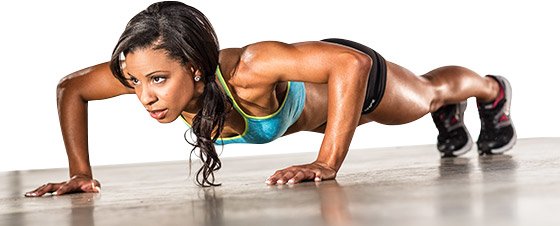
This is why strength training is so amazing. Pulling or pushing against the weight of an iron bar not only increases our physical strength, but our mental strength as well. It allows women to shatter self-imposed limitations and discover new capabilities.
And let's be honest: performing a flawless set of push-ups or deadlifting 1.5 times your bodyweight for the first time feels amazing. You can't help but be empowered.
This benefit alone makes lifting heavy things a priceless pursuit.
Strength training is not a quick fix to build a better-looking body for a single swimsuit season. It should be an activity you maintain for the rest of your life. And in my experience, focusing solely on getting stronger and improving one's performance has proven to be a phenomenal way to increase workout motivation for the long-term. Here's why:
First, the goal of getting stronger is incredibly motivating. When your workouts revolve around adding more weight to the bar or performing more reps with a particular weight, you always have a specific goal for the day. Specific goals take out a lot of guesswork and make workouts and fitness programs run a lot more smoothly.
Too many people go to the gym and work out without any defined purpose. Those people are mostly worried about burning as many calories as possible and achieving a high level of fatigue. Achieving fatigue is not a worthwhile goal and makes consistent motivation damn-near impossible.
But when you know that you have to do a little bit better than you did last week, you have an enjoyable, tangible mission—one that you can actually measure and track in your workout log.
Second, when women get stronger and are able to accomplish milestones we don't think are possible, we're left wondering "Wow, what else can I do?" When that happens, the switch has been flipped. Getting bit by the strength-bug means you won't ever have to worry about feeling motivated again. You'll always want to push to see how much better you can be.
This is an incredibly powerful factor because consistently training will lead to those better-body results you're after. Even better, you'll maintain these results long-term because you'll be hooked for life!
But something powerful happens when women ditch the scale and instead focus on the weight on the barbell . By striving to get stronger, it's much more likely you'll worry more about how much weight you're pushing, pulling, or squatting than what number you see on your bathroom scale.
For a lot of women, this is a big deal. Your opinion of your body should be based on what it can do and achieve, not on its relationship with gravity. When you measure success by what more you can do instead of how much less you can weigh, you'll be much, much happier.
And here's the truly awesome part: When you focus on getting stronger and constantly perform a little better each time you repeat a workout, you'll still achieve those physique-carving goals; they just become incredible side effects.
Learning to love you body for what it can do instead of how it looks is freeing. You're no longer chained to that idea of perfection, and that freedom is an unbelievable feeling.
So ditch the "bikini booty" workouts and unleash your true strength.
Start getting stronger today!
I encourage you to focus solely on getting stronger for the next 6-8 weeks, at least. Make your workouts about doing a little better than you did last week by adding weight to the barbell or grabbing heavier dumbbells.
Source: http://www.bodybuilding.com/fun/4-awesome-reasons-women-should-train-for-strength.html
There's no doubt that strength training is an incredibly effective and efficient way to build a sexy, lean, healthy body that looks great in and out of your clothes.
But these great physique-carving perks are only the tip of the strength-training-benefits iceberg. So ladies, listen up. It's time to put down those little dumbbells and put the "strength" back in strength training. It's time to add more weight to the barbell and put some bigger lifts in your regimen. You're about to discover how getting stronger in the weight room can have a huge impact on your mind and body.
Here are four great reasons to make strength gains your primary training focus.
1. GETTING STRONGER INCREASES YOUR MENTAL POWER
When my women clients achieve feats of strength they thought were out of reach for them—like performing their first bodyweight chin-up or deadlifting more than their bodyweight—they become noticeably more confident. They begin to carry themselves differently; and things that may have been intimidating before, no longer are. As a result, many women step out of their initial comfort zones, try new things and take more risks in and out of the gym.This is why strength training is so amazing. Pulling or pushing against the weight of an iron bar not only increases our physical strength, but our mental strength as well. It allows women to shatter self-imposed limitations and discover new capabilities.
And let's be honest: performing a flawless set of push-ups or deadlifting 1.5 times your bodyweight for the first time feels amazing. You can't help but be empowered.
This benefit alone makes lifting heavy things a priceless pursuit.
 2. GETTING STRONGER INCREASES YOUR LONG-TERM WORKOUT MOTIVATION
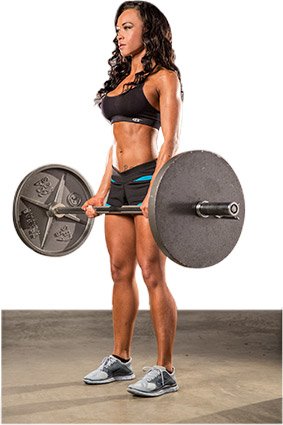
Strength training is not a quick fix to build a better-looking body for a single swimsuit season. It should be an activity you maintain for the rest of your life. And in my experience, focusing solely on getting stronger and improving one's performance has proven to be a phenomenal way to increase workout motivation for the long-term. Here's why:First, the goal of getting stronger is incredibly motivating. When your workouts revolve around adding more weight to the bar or performing more reps with a particular weight, you always have a specific goal for the day. Specific goals take out a lot of guesswork and make workouts and fitness programs run a lot more smoothly.
Too many people go to the gym and work out without any defined purpose. Those people are mostly worried about burning as many calories as possible and achieving a high level of fatigue. Achieving fatigue is not a worthwhile goal and makes consistent motivation damn-near impossible.
But when you know that you have to do a little bit better than you did last week, you have an enjoyable, tangible mission—one that you can actually measure and track in your workout log.
Second, when women get stronger and are able to accomplish milestones we don't think are possible, we're left wondering "Wow, what else can I do?" When that happens, the switch has been flipped. Getting bit by the strength-bug means you won't ever have to worry about feeling motivated again. You'll always want to push to see how much better you can be.
This is an incredibly powerful factor because consistently training will lead to those better-body results you're after. Even better, you'll maintain these results long-term because you'll be hooked for life!
3. GETTING STRONGER MEANS YOU'LL FOCUS ON THE WEIGHT OF THE BAR, NOT THE SCALE
If your goal is to lose body fat or just look better, you probably rely on the bathroom scale to gauge your success. As a result, you can almost become obsessed with the number glaring back at you.But something powerful happens when women ditch the scale and instead focus on the weight on the barbell . By striving to get stronger, it's much more likely you'll worry more about how much weight you're pushing, pulling, or squatting than what number you see on your bathroom scale.
For a lot of women, this is a big deal. Your opinion of your body should be based on what it can do and achieve, not on its relationship with gravity. When you measure success by what more you can do instead of how much less you can weigh, you'll be much, much happier.
And here's the truly awesome part: When you focus on getting stronger and constantly perform a little better each time you repeat a workout, you'll still achieve those physique-carving goals; they just become incredible side effects.
4. GETTING STRONGER INSTILLS PRIDE AND SELF LOVE
Many women want to look amazing, and there's not a thing wrong with that. But I think it's crucial that we start to love our bodies, not just for how they look, but for what they can do. Strength goals help you to love your body because of its physical abilities. You don't have to wait until you improve your body fat percentage; you can be proud of your body right now, at this very moment.Learning to love you body for what it can do instead of how it looks is freeing. You're no longer chained to that idea of perfection, and that freedom is an unbelievable feeling.
So ditch the "bikini booty" workouts and unleash your true strength.
Start getting stronger today!
I encourage you to focus solely on getting stronger for the next 6-8 weeks, at least. Make your workouts about doing a little better than you did last week by adding weight to the barbell or grabbing heavier dumbbells.
Source: http://www.bodybuilding.com/fun/4-awesome-reasons-women-should-train-for-strength.html
3 WAYS TO GAIN STRENGTH WITHOUT LIFTING HEAVY WEIGHTS
There's no shame in training with lighter weights. Research shows that the correct light-weight training can build strength.
Hey, you!
Yeah, you, the one struggling to hit a new personal bench press record by lifting heavy week after week. Sure, I get it. Multiple plates make anyone look like a badass, but despite trying to lift heavier and heavier, the results just don't seem to add up. Experienced trainees in particular will find it more and more challenging to hit loftier numbers.
Here's a thought: How about you stop focusing solely on moving heavy weights as a way to get stronger. Try supplementing your strength training program with the following modes of non-heavy weight training.
Speed work refers to a type of strength training which uses a much lower percentage of your maximal weight. Lifting weights with greater bar speed trains your stretch reflex and your ability to build momentum more quickly, as well as recruit more muscle fibers. This type of training benefits athletes whose sports involve generating a huge amount of force in as short a time as possible.
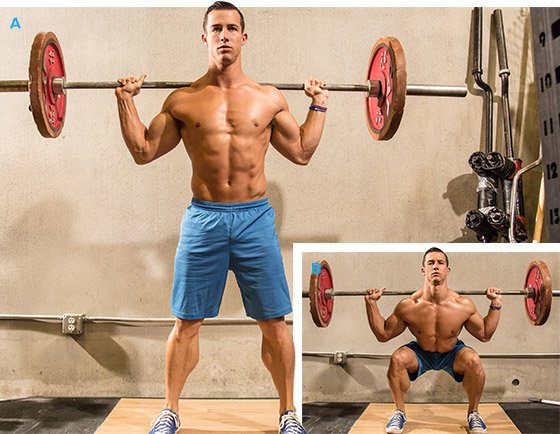
Also known as explosive strength, speed work typically involves lifting weights at 45-65 percent of your 1-rep max for 2-6 reps per set as explosively as possible. To get the most out of this speed work, you need to treat each rep as if you're pushing max effort; pick up or push the weight really, really fast or in an explosive manner on the upward motion—of a squat, for example.
Imagine you are doing speed squats. Descend quickly into the hole, pause briefly, and then shoot back up as powerfully and quickly as you can while maintaining proper squat form. Just because the weight is lighter doesn't mean you slack off on form. On the contrary, this is the best time to hone in on your technique. Since speed work hits both lower-than-max weight and reps, you'll benefit from more total sets than a typical heavyweight rep scheme, equating to a higher volume of work (typically 12 sets).
Plyometrics and Olympic lifts can also help in the same way as speed work, but it should be important to build upon your explosiveness in more relevant areas. A clean and jerk, for example, probably won't do much to build your bench press, whereas plyometric push-ups will.
Sprinting is the anabolic—or musclebuilding—form of cardio which develops your cardiovascular health, while keeping strength and muscular growth. It reduces impact by reducing running time (as compared to traditional long-distance running), but it should be extremely intense.
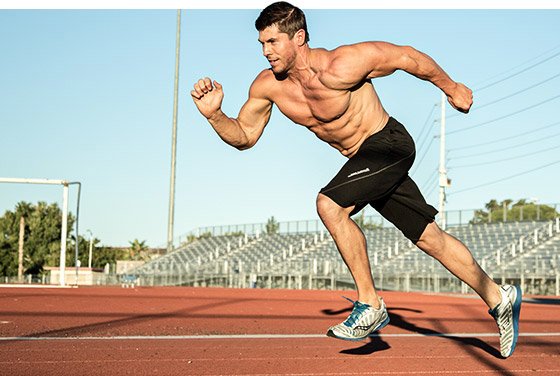
Sprinting should complement your training program, but not make you so fatigued that the rest of your training suffers. While you can sprint on a track, cycling can also be an option if your goal is to gain muscle mass, since it doesn't burn as many calories as running. You can get a lot of quality anaerobic work on a prowler or sled, if you have access to that special equipment.
Avoid doing cardio on the same day as a heavy lifting session (or at least not on the same day as a lift you care about), and make sure you get enough sleep and calories to maximize recovery.
You can see great benefits from one or two sessions of sprint intervals or high-intensity interval training (HIIT) each week.
3. GET MORE LEAN MUSCLE MASS
Composition refers to the ratio of your fat mass to lean mass. Ideally, you'd aim to pack the most possible muscle on your frame and get stronger for your relative size.
This is relevant because common sense says that—with all things being equal—a person with more muscle tends to be stronger than someone with less.
To this end, training in bodybuilding-style 8-12 rep schemes and reeling in a tighter line on your diet (count your macros every now and then!) could help you cut out the excess fat and maximize your strength potential per pound.
You'll still want to do a lot of work with your main lifts, but you'll also need to do isolation-style exercises to ensure maximum hypertrophy as well.
Other strength programs might rotate between heavy, speed, and bodybuilding days, while also including assistance work and cardiovascular training on off days. For best results, lifts should be tested in a variety of styles—variations on form, loading patterns, and lifts which identify muscular weaknesses—to help break through any personal weak points. An example of this is working on hamstrings to help improve squats.
Find the right balance here and you'll soon find that the only problem you have with strength training is that too many of your friends will start asking you to help move couches around.
Source: http://www.bodybuilding.com/fun/3-ways-to-gain-strength-without-lifting-heavy-weights.html
Hey, you!
Yeah, you, the one struggling to hit a new personal bench press record by lifting heavy week after week. Sure, I get it. Multiple plates make anyone look like a badass, but despite trying to lift heavier and heavier, the results just don't seem to add up. Experienced trainees in particular will find it more and more challenging to hit loftier numbers.
Here's a thought: How about you stop focusing solely on moving heavy weights as a way to get stronger. Try supplementing your strength training program with the following modes of non-heavy weight training.
1. INCORPORATE LIGHT BAR SPEED WORK
The idea of not lifting heavy may sound blasphemous, but research has shown that lifting lighter may be just as effective as going heavy and hard for building strength. This is not to say that you—especially if you're an advanced and experienced lifter—should use only baby weights from now on. Try speed work.Speed work refers to a type of strength training which uses a much lower percentage of your maximal weight. Lifting weights with greater bar speed trains your stretch reflex and your ability to build momentum more quickly, as well as recruit more muscle fibers. This type of training benefits athletes whose sports involve generating a huge amount of force in as short a time as possible.
Also known as explosive strength, speed work typically involves lifting weights at 45-65 percent of your 1-rep max for 2-6 reps per set as explosively as possible. To get the most out of this speed work, you need to treat each rep as if you're pushing max effort; pick up or push the weight really, really fast or in an explosive manner on the upward motion—of a squat, for example.
Imagine you are doing speed squats. Descend quickly into the hole, pause briefly, and then shoot back up as powerfully and quickly as you can while maintaining proper squat form. Just because the weight is lighter doesn't mean you slack off on form. On the contrary, this is the best time to hone in on your technique. Since speed work hits both lower-than-max weight and reps, you'll benefit from more total sets than a typical heavyweight rep scheme, equating to a higher volume of work (typically 12 sets).
Plyometrics and Olympic lifts can also help in the same way as speed work, but it should be important to build upon your explosiveness in more relevant areas. A clean and jerk, for example, probably won't do much to build your bench press, whereas plyometric push-ups will.
2. SPRINT YOUR WAY TO GAINS
In this context, work capacity refers to the degree in which you can or cannot maintain repeated bouts of high intensity (e.g. how many sets and reps can you take above 90 percent effort?). Improving work capacity in regard to strength training is a fancy way of saying, "Duh, do more sprint work."Sprinting is the anabolic—or musclebuilding—form of cardio which develops your cardiovascular health, while keeping strength and muscular growth. It reduces impact by reducing running time (as compared to traditional long-distance running), but it should be extremely intense.
Sprinting should complement your training program, but not make you so fatigued that the rest of your training suffers. While you can sprint on a track, cycling can also be an option if your goal is to gain muscle mass, since it doesn't burn as many calories as running. You can get a lot of quality anaerobic work on a prowler or sled, if you have access to that special equipment.
Avoid doing cardio on the same day as a heavy lifting session (or at least not on the same day as a lift you care about), and make sure you get enough sleep and calories to maximize recovery.
You can see great benefits from one or two sessions of sprint intervals or high-intensity interval training (HIIT) each week.
3. GET MORE LEAN MUSCLE MASS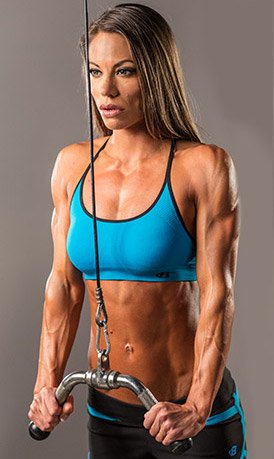
Composition refers to the ratio of your fat mass to lean mass. Ideally, you'd aim to pack the most possible muscle on your frame and get stronger for your relative size.This is relevant because common sense says that—with all things being equal—a person with more muscle tends to be stronger than someone with less.
To this end, training in bodybuilding-style 8-12 rep schemes and reeling in a tighter line on your diet (count your macros every now and then!) could help you cut out the excess fat and maximize your strength potential per pound.
You'll still want to do a lot of work with your main lifts, but you'll also need to do isolation-style exercises to ensure maximum hypertrophy as well.
PUTTING IT TOGETHER
In order to harness your full strength potential, you will need to incorporate speed work and sprints, and improve your amount of muscle per pound of body weight to help build strength. By going (and being) lighter, you can get faster and stronger.Other strength programs might rotate between heavy, speed, and bodybuilding days, while also including assistance work and cardiovascular training on off days. For best results, lifts should be tested in a variety of styles—variations on form, loading patterns, and lifts which identify muscular weaknesses—to help break through any personal weak points. An example of this is working on hamstrings to help improve squats.
Find the right balance here and you'll soon find that the only problem you have with strength training is that too many of your friends will start asking you to help move couches around.
Source: http://www.bodybuilding.com/fun/3-ways-to-gain-strength-without-lifting-heavy-weights.html
Why Strength Training May Help You Live Longer
Engaging in regular physical exercise or activities has been shown to promote good health, reduce your chances of developing many diseases, and assist you in living a longer, happier and healthier life. For the majority of older persons, “exercise” often consists jogging, walking, using an elliptical or a stair- climber, or pursuing other activities that help to elevate your heart rate and make you sweat.
However, strength training may actually have an equally if not more important role than aerobic exercise as we age. In fact, as we approach the age of 50, strength or resistance training is crucial for maintaining the ability to have an active and independent lifestyle.

It turns out the the average 30-35 year old person will experience roughly a 25 percent decline in his or her muscle strength and tone by the age of 70-75, and up to a 50 percent decline approaching the age of 90. Simply doing aerobic exercise such as walking or light treadmill workouts will not be adequate to preserve muscle tone, bone health, balance and posture. If you are not engaging in strength or resistance training, the chances are high that you will lose strength and become less functional as you age.
Strength training can involve a number of approaches including using free weights, such as dumbbells or barbells, resistance or elastic bands that allow you to flex using your arms and legs, as well as ankle weights or vests and other special exercises that use your body weight to simulate resistance against gravity.
A simple strength or resistance workout can be as little as 10-15 minutes without significant stress or strain on your joints or extremities. Paying attention to proper form, while doing the exercises slowly and consistently on a regular basis is the most important aspect of any such program. It may take 1-2 months before you start to realize the health benefits, flexibility, ease of movement and potentially less muscle aching and joint pain. Joining a gym or health club may allow you to experience a number of equipment choices; however, using books or watching videos is another valuable option.
Its important to start slow and gradually in order to prevent injuries and to discuss your workout plan with your doctor, especially if you have coronary artery disease, diabetes or any chronic lung disease. Its not unusual to experience mild muscle soreness in the first 1-2 weeks, but if you have worsening muscle soreness or pain, its important to consult your doctor.
Its clear that strength training using weight machines, free weights or resistance bands can help build and preserve muscle mass and strength. However, more important is that strong muscles maintain and produce stronger bones. Having strong bones is a key way to reduce the risk of fractures secondary to osteoporosis.
Inactivity, poor nutrition, and age-related changes, all help to reduce bone mass at the rate of approximately 1% per year after age 40. As a result, after a minor fall, our bones are more fragile and thus likely to break after minor stress or tension.
Osteoporosis, the loss of bone mass, is an important concern as we age. Osteoporosis, which is responsible for more than two million fractures year, affects nearly 10 million people in the US (8 million women, 2 million men) Hip fractures are often the most serious concern of those with osteoporosis. Most studies have shown that nearly 60 percent of people who suffer a hip fracture never completely become independent again.
Research has clearly shown that strength training can help to reduce the pace of bone loss, while some studies have demonstrated that such training can actually help to build bone. This important role is quite helpful reduce the age-related decline in bone mass. Movements and exercises that place stress on bones help to form additional calcium deposits and stimulate bone forming cells. The combination of positive stress on bone from aerobic and strength training leads to stronger, denser and more functional bone.
Strength training also has positive benefits on bone maintenance and stability that eclipse the potential benefits of aerobic weight-bearing exercise. It targets the bones of the spine, hips, wrists, and ribs, which are common sites that fracture.
Finally, resistance workouts, especially those that include exercises focusing on balance and power, play an important role to increase strength and stability. This ultimately can increase confidence and well being, helping you to remain active, and decrease the possibility of fractures due to falls.
However, strength training may actually have an equally if not more important role than aerobic exercise as we age. In fact, as we approach the age of 50, strength or resistance training is crucial for maintaining the ability to have an active and independent lifestyle.
It turns out the the average 30-35 year old person will experience roughly a 25 percent decline in his or her muscle strength and tone by the age of 70-75, and up to a 50 percent decline approaching the age of 90. Simply doing aerobic exercise such as walking or light treadmill workouts will not be adequate to preserve muscle tone, bone health, balance and posture. If you are not engaging in strength or resistance training, the chances are high that you will lose strength and become less functional as you age.
Strength training can involve a number of approaches including using free weights, such as dumbbells or barbells, resistance or elastic bands that allow you to flex using your arms and legs, as well as ankle weights or vests and other special exercises that use your body weight to simulate resistance against gravity.
A simple strength or resistance workout can be as little as 10-15 minutes without significant stress or strain on your joints or extremities. Paying attention to proper form, while doing the exercises slowly and consistently on a regular basis is the most important aspect of any such program. It may take 1-2 months before you start to realize the health benefits, flexibility, ease of movement and potentially less muscle aching and joint pain. Joining a gym or health club may allow you to experience a number of equipment choices; however, using books or watching videos is another valuable option.
Its important to start slow and gradually in order to prevent injuries and to discuss your workout plan with your doctor, especially if you have coronary artery disease, diabetes or any chronic lung disease. Its not unusual to experience mild muscle soreness in the first 1-2 weeks, but if you have worsening muscle soreness or pain, its important to consult your doctor.
Its clear that strength training using weight machines, free weights or resistance bands can help build and preserve muscle mass and strength. However, more important is that strong muscles maintain and produce stronger bones. Having strong bones is a key way to reduce the risk of fractures secondary to osteoporosis.
Inactivity, poor nutrition, and age-related changes, all help to reduce bone mass at the rate of approximately 1% per year after age 40. As a result, after a minor fall, our bones are more fragile and thus likely to break after minor stress or tension.
Osteoporosis, the loss of bone mass, is an important concern as we age. Osteoporosis, which is responsible for more than two million fractures year, affects nearly 10 million people in the US (8 million women, 2 million men) Hip fractures are often the most serious concern of those with osteoporosis. Most studies have shown that nearly 60 percent of people who suffer a hip fracture never completely become independent again.
Research has clearly shown that strength training can help to reduce the pace of bone loss, while some studies have demonstrated that such training can actually help to build bone. This important role is quite helpful reduce the age-related decline in bone mass. Movements and exercises that place stress on bones help to form additional calcium deposits and stimulate bone forming cells. The combination of positive stress on bone from aerobic and strength training leads to stronger, denser and more functional bone.
Strength training also has positive benefits on bone maintenance and stability that eclipse the potential benefits of aerobic weight-bearing exercise. It targets the bones of the spine, hips, wrists, and ribs, which are common sites that fracture.
Finally, resistance workouts, especially those that include exercises focusing on balance and power, play an important role to increase strength and stability. This ultimately can increase confidence and well being, helping you to remain active, and decrease the possibility of fractures due to falls.
Subscribe to:
Posts (Atom)
Popular Posts
-
To use rope-jumping for fitness, you need to be skilled enough to jump continuously for twenty to thirty minutes, and jumping that long and ...
-
Of no other fat-loss activity -- eating less, walking on a treadmill, doing sit-ups -- can it be said that participants eagerly count the mi...
-
Dr. Yu-Min Kuo, of the National Cheng Kung University Medical College in Taiwan, has shown how exercise helps to preserve brain function as ...
-
Some of the weight loss articles out there these days are getting a little nutty. New scientific studies that shed light on how metabolism w...
-
Aging does not cause you to lose muscles. Loss of muscle is caused by lack of exercise. You can preserve both muscle size and strength by co...

