Showing posts with label strength training exercises. Show all posts
Showing posts with label strength training exercises. Show all posts
3 Rules Of Strength: Maximize Your Gains
Don't overcomplicate strength training because a DVD said to. Harness the gains you seek with proven lifts and the principles of practice, efficiency, and intensity.
I coached high school football for a year after I graduated college. Working with teenage linebackers taught me to condense and convey information quickly because they could only handle so much at one time. Now, several years into my professional career, I find the same training rules apply to adults.
I give my clients one piece of information at a time, and only two or three coaching cues during a training session. The limited information keeps my trainees from overanalyzing, which subsequently improves their performance. The same is true for exercise selection. Rather than crowding a program
with excess miscellaneous, wonder exercises, I keep it simple and use 2-3 solid movements per session.
Cut what's meaningless and keep what's productive. That's my program mantra. I used to overcomplicate and overanalyze every program I wrote, which was dumb. Instead of spending limited time on a thousand lifts, it's better to build strength with the basics. That's what I'm here to help you do.
Strength Made Simple
Practice, efficiency, and intensity are elements that build a strong human. Whether you've been a competing powerlifter since the 1980s or a desk jockey looking for manly time with the iron, using 2-3 concentrated movements per session will hit all three elements. Oh, and it gets you strong. Strong like if Godzilla and Sasquatch had a baby named Thunder.
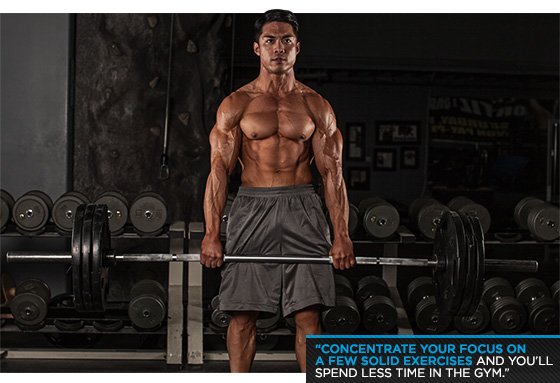
Take these three elements and apply them consistently to get big and strong. Forget "muscle confusion." The body adapts with consistency, not randomness. Use the same lifts consistently and progress by building size and strength. Unless you're in the midst of a seven-year plateau, training at maximum intensity, you don't need a variety swing.
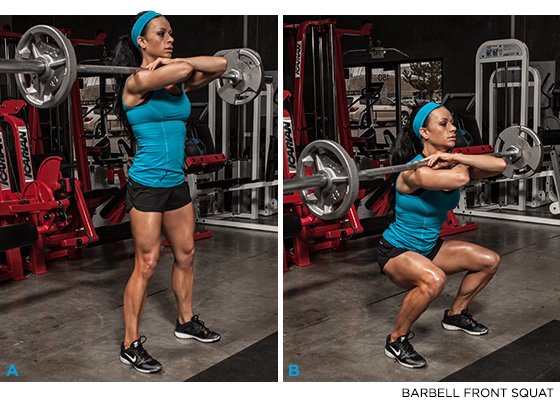
When you determine what you want to master and what lifts don't leave your frame in shambles, all that's left is to combine the elements: practice, efficiency, intensity, and your chosen lifts. The result? A supernova of progressive strength and size gains!
(Note: If you've never had your movement assessed by a qualified strength coach, make it happen. It's the most efficient way to discover what exercises work for you.)
Source: http://www.bodybuilding.com/fun/3-rules-of-strength-maximize-your-gains.html
I coached high school football for a year after I graduated college. Working with teenage linebackers taught me to condense and convey information quickly because they could only handle so much at one time. Now, several years into my professional career, I find the same training rules apply to adults.
I give my clients one piece of information at a time, and only two or three coaching cues during a training session. The limited information keeps my trainees from overanalyzing, which subsequently improves their performance. The same is true for exercise selection. Rather than crowding a program
with excess miscellaneous, wonder exercises, I keep it simple and use 2-3 solid movements per session.
Cut what's meaningless and keep what's productive. That's my program mantra. I used to overcomplicate and overanalyze every program I wrote, which was dumb. Instead of spending limited time on a thousand lifts, it's better to build strength with the basics. That's what I'm here to help you do.
Strength Made Simple
Practice, efficiency, and intensity are elements that build a strong human. Whether you've been a competing powerlifter since the 1980s or a desk jockey looking for manly time with the iron, using 2-3 concentrated movements per session will hit all three elements. Oh, and it gets you strong. Strong like if Godzilla and Sasquatch had a baby named Thunder.
1. Practice
Most people don't view gym time as practice, but that's exactly what it is. People who achieve excellence aren't born excellent. They achieve excellence because they do what they're excellent at often. A terrific housepainter most likely got that way through painting a lot of houses. If you want to be a great squatter, do lots of squats.2. Efficiency
Efficiency comes from time spent training quality movements. Concentrate your focus on a few solid exercises and you'll spend less time in the gym. To be strong you must put yourself in the best position possible to efficiently generate force. Finding the best position for your body requires countless reps.3. Intensity
Reps must be performed at varying intensities for the same exercise at different times within a training session for maximum results. You don't have to move on to a random exercise. You can continue to focus on a lift that requires practice.Take these three elements and apply them consistently to get big and strong. Forget "muscle confusion." The body adapts with consistency, not randomness. Use the same lifts consistently and progress by building size and strength. Unless you're in the midst of a seven-year plateau, training at maximum intensity, you don't need a variety swing.
What Lifts Should You Perform?
It depends on what lifts you want to be good at and what lifts work well for your body. Luckily, there are movements faithfully devoted to the promotion of human strength. They should be familiar to you: squats, presses, deadlifts, and Olympic lifts.When you determine what you want to master and what lifts don't leave your frame in shambles, all that's left is to combine the elements: practice, efficiency, intensity, and your chosen lifts. The result? A supernova of progressive strength and size gains!
(Note: If you've never had your movement assessed by a qualified strength coach, make it happen. It's the most efficient way to discover what exercises work for you.)
Source: http://www.bodybuilding.com/fun/3-rules-of-strength-maximize-your-gains.html
7 Ways to Maximize Your Strength and Speed
Strength and speed are both essential, but the real key to performance lies in combining the two. Learn the 7 principles of power.
Look at a bodybuilder or powerlifter: Who doesn't want to be powerful!? While you may have a general idea as to what that means—perhaps a gorilla's beastlike strength, a monster truck, or maybe Benny deadlifting a grand—in fact power has a more precise definition. What does "power" mean and how do you develop it? Let's take a look.
If you remember from your high school physics class—you did take that, right?—power is expressed as equal to force times distance over time (P=(F x D)/T). To further confuse you, force is created by a factor of acceleration times mass (F=MA). These equations prove that weight alone isn't the only factor in play; so are speed (how fast you accelerate), distance, and time. Hence, training for power encompasses all these variables. To be clear, training for power isn't the same as training for strength.
Any change in the force produced, distance moved, or the time it took you to move a given load will lead to an increase in power production. It's not just about moving heavy weight!
Intelligent lifters looking for greater power must incorporate these 7 principles of power.
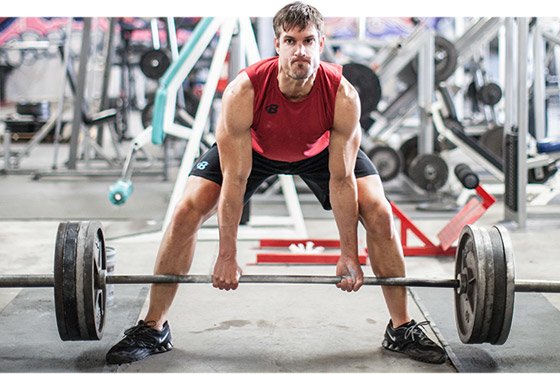
We could define absolute strength as the maximum amount of force an athlete can apply with his body or the maximum amount of force that can be produced in a particular muscular contraction. This trait is primarily developed through training with loads that are above 90 percent of your one-rep max. The core concept behind absolute strength is motor unit recruitment.
Training to increase strength (typically with heavy loads for fewer reps) is distinct from training for size (moderate loads for moderate reps), though you'll get some size benefits with strength training. The number of firing motor units is also affected by the load. While bodybuilders usually take sets to failure to exhaust a muscle, that's not the case when training for strength. All these variables make strength training distinct and allow you to tailor your training efforts to focus on this building absolute strength.
This might be better described as speed strength, learning to move heavy weights quickly. Dynamic refers to the speed at which force can be produced, rather than sheer force alone. Some athletic movements (gymnastics, shot put, jumping, etc.) require this type of speed, as do some moves in the weight room (Olympic weightlifting, box jumps).
Speed strength trains rate of force development and could be the most important athletic trait to consider. I In the previous section we were concerned with the overall number of motor units recruited, now we are trying to recruit those motor units earlier and faster.
Dynamic strength is best developed with moderate loads moved at a maximum velocity. Remember that power—or force—is the product of mass (absolute strength) and velocity (speed strength); these are the two pillars your development must rest on. Absolute strength is trained with heavy slow-moving loads; speed strength is trained with light or moderate loads moved fast. That's a critical difference.
Intensities are best programmed in the 40-60 percent range, so these loads are relatively light. Still, repetitions should still be kept low, usually in the 2-3 rep range. To increase volume, add more sets rather than adding reps (12 sets of 3 instead of 4 sets of 9). Move these loads as fast as you can. If you lift 500 pounds and are training with 250 pounds, apply your full throttle 500 pounds to that bar and rock it.
Frequently, focus is given to the eccentric (negative, or lowering) phase of the movement. The force the muscle produces depends on the speed of shortening or lengthening and the absolute length of the muscles at any instant in time. In eccentric exercise, force increases as the velocity of stretch increases.
The faster the transition from eccentric to concentric occurs, the greater the muscular contraction produced and the greater overall power. Jumps, clapping push-ups, bounds, throws, and hops are all effective plyometric movements to train you to move quickly.
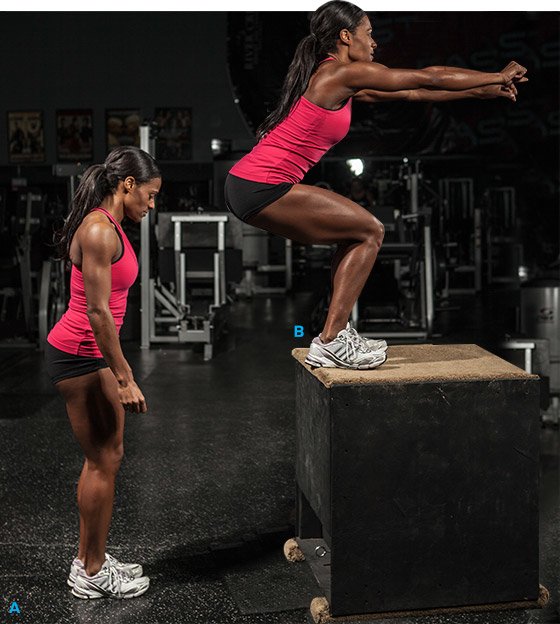
Bodybuilders may lift slowly to maximize hypertrophy, but for athletes or people seeking power development, lifting slowly isn't going to cut it. If you want to add some "go" to your "show" include plyo in your training. It will go a long way to keeping those growing muscles fast and athletic.
The general consensus is that movements which require higher skill and neurological activity be done early in your training session. While some plyo or Olympic lifts won't prevent you from making your strength or hypertrophy gains—if anything, they'll help—fatiguing motor units prior to explosive training may hinder your ability to improve power production. My regular recommendation for strength athletes is to include 1-2 plyometric movements immediately after warm-ups, just prior to the performance of major strength movements. This will not only further warm-up goals, but will also improve nerve-muscle reactions and your ability to produce force in your primary strength movement. Select plyometrics movements that are applicable to that training day, such as depth jumps for squat day, throws for pressing, etc.
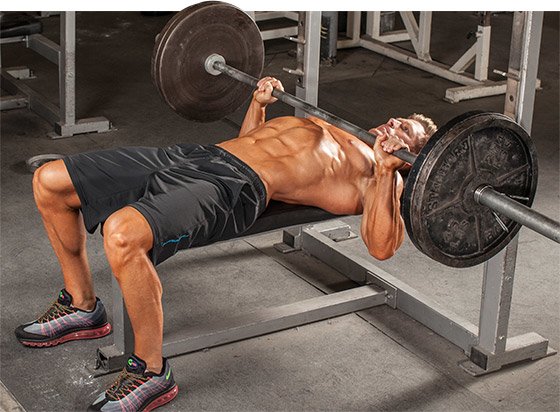
Applied to the bench press, the weight starts at chest level instead of being lowered from the top. You'll need to be in the power rack for this movement. Set the pins so the bar will be just above the chest. Starting from the bottom eliminates some of that stretch reflex, helping you get significantly stronger in the bottom position. You can adjust the height of the pins to work through sticking points or to progressively bring down a heavier weight (this is great for squats, too).
You'll want to be using the power rack (some Smith machines allow you to set the bottom of the range of motion, too) on these movements so a weight can settle between reps. Alternatively, holding the bottom position for a long count between reps also reduces the stretch reflex.
Bands and chains work in a similar way. At the bottom of the movement the load is lighter—the bands aren't stretched or the chains are settled on the floor. As you drive through the concentric phase of the lift, they increase the resistance so the weight becomes heavier toward the top. This increased weight strengthens your lockout and teaches you to accelerate. Bands and chains can be used for both heavy and light work.
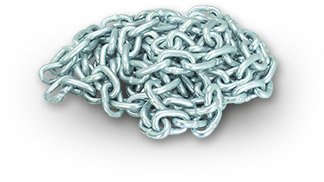
Use 5/8-inch chains folded in half and attached to a 1/4-inch leader chain that's suspended from the bar. Adjust the leader so that a link or two touches the floor at the top of the movement. For most people 1-2 chains are sufficient.
Bands come in two sizes. Short bands are ideal for benches and deadlifts, while long bands can be used for anything. Both come in a range of resistances, from 30 to more than 200 pounds. Make sure the bands are securely anchored, and—with long bands—play with the setup until you have adequate tension both at the bottom and top. There should be no slack in the bands at any time.
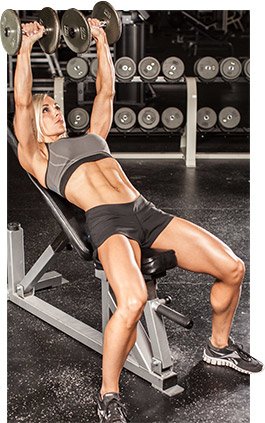
There was a wave of popularity for a while for training in an unstable environment, such as on a ball or on one leg, though thankfully it's falling out of practice. While there are some applications for such techniques, they do little to help you become more powerful. Such techniques are great for core building but come at the expense of power, strength and size development. Moving heavy loads requires you to be stabilized, and any energy "leak" in your system, lack of tightness in any area, or any instability will radically decrease the amount of force you're able to transmit to the bar.
Imagine your bench press. Many trainees can be seen lying back on an exercise ball, a habit that's about as effective as firing a cannon out of a canoe. Did you know that many strong powerlifters get sore lats from bench pressing? That is how tight they are. From the grip on the bar, to retracted shoulder blades, through the hips, and down the legs that are driving down into the floor, the entire system is set up to provide stability to the load being moved.
Whatever the lift is, you should be solid as a rock. You'll have whatever part of you is touching the floor to push against, maybe a bench, even a belt, but much of your stability will have to come from you being properly positioned and keeping muscles tight.
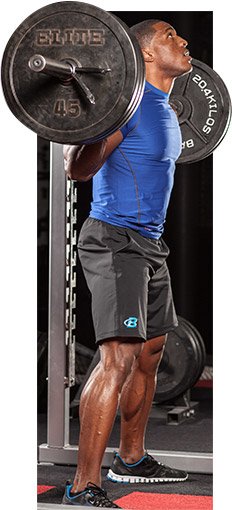
Ultimately, there isn't an easy, practical training tip to give here like in the other six sections. Despite that, this may be the most valuable advice in the whole piece. I'm constantly amazed at people who make a living in this industry who know little about lifting.
Be a student, absorb knowledge, and study. High-level power will be impossible without continuous learning. How does bar position affect torso angle in the squat? Should the bar path in a bench press move in an arc or a straight line? Why are my knees caving in? These simple questions and answers are absolutely vital to good technique. Ensuring you know the answers will go a long way to increasing your power output.
Source: http://www.bodybuilding.com/fun/7-ways-to-maximize-your-strength-and-speed.html
Look at a bodybuilder or powerlifter: Who doesn't want to be powerful!? While you may have a general idea as to what that means—perhaps a gorilla's beastlike strength, a monster truck, or maybe Benny deadlifting a grand—in fact power has a more precise definition. What does "power" mean and how do you develop it? Let's take a look.
If you remember from your high school physics class—you did take that, right?—power is expressed as equal to force times distance over time (P=(F x D)/T). To further confuse you, force is created by a factor of acceleration times mass (F=MA). These equations prove that weight alone isn't the only factor in play; so are speed (how fast you accelerate), distance, and time. Hence, training for power encompasses all these variables. To be clear, training for power isn't the same as training for strength.
Any change in the force produced, distance moved, or the time it took you to move a given load will lead to an increase in power production. It's not just about moving heavy weight!
Intelligent lifters looking for greater power must incorporate these 7 principles of power.
1. ABSOLUTE STRENGTH
Maximal strength might be the most obvious trait to develop for power development; clearly it's the most beneficial and recognizable feature. Many lifters will recognize this concept in their maximal effort training used to develop absolute strength.We could define absolute strength as the maximum amount of force an athlete can apply with his body or the maximum amount of force that can be produced in a particular muscular contraction. This trait is primarily developed through training with loads that are above 90 percent of your one-rep max. The core concept behind absolute strength is motor unit recruitment.
Training to increase strength (typically with heavy loads for fewer reps) is distinct from training for size (moderate loads for moderate reps), though you'll get some size benefits with strength training. The number of firing motor units is also affected by the load. While bodybuilders usually take sets to failure to exhaust a muscle, that's not the case when training for strength. All these variables make strength training distinct and allow you to tailor your training efforts to focus on this building absolute strength.
 2. DYNAMIC STRENGTH
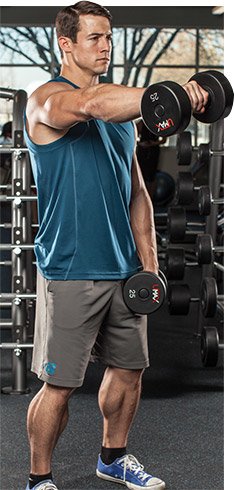
This might be better described as speed strength, learning to move heavy weights quickly. Dynamic refers to the speed at which force can be produced, rather than sheer force alone. Some athletic movements (gymnastics, shot put, jumping, etc.) require this type of speed, as do some moves in the weight room (Olympic weightlifting, box jumps).Speed strength trains rate of force development and could be the most important athletic trait to consider. I In the previous section we were concerned with the overall number of motor units recruited, now we are trying to recruit those motor units earlier and faster.
Dynamic strength is best developed with moderate loads moved at a maximum velocity. Remember that power—or force—is the product of mass (absolute strength) and velocity (speed strength); these are the two pillars your development must rest on. Absolute strength is trained with heavy slow-moving loads; speed strength is trained with light or moderate loads moved fast. That's a critical difference.
Intensities are best programmed in the 40-60 percent range, so these loads are relatively light. Still, repetitions should still be kept low, usually in the 2-3 rep range. To increase volume, add more sets rather than adding reps (12 sets of 3 instead of 4 sets of 9). Move these loads as fast as you can. If you lift 500 pounds and are training with 250 pounds, apply your full throttle 500 pounds to that bar and rock it.
3. PLYOMETRICS
While plyometrics are reliant on speed strength, a primary principle that differentiates them from dynamic effort methods is the emphasis on the stretch-shortening cycle at the beginning of each rep. Think of your muscles as a rubber band. Before you can shoot that rubber band at someone, you first have to stretch it. While not a perfect analogy, lengthening muscles deep into an eccentric motion stores potential elastic energy. This is why your first rep on dumbbell bench presses is often the most difficult: You start with the weight in the down position, and that first rep has no elastic energy built up. To apply power in plyometrics, the joint angle is then reversed as quickly as possible.Frequently, focus is given to the eccentric (negative, or lowering) phase of the movement. The force the muscle produces depends on the speed of shortening or lengthening and the absolute length of the muscles at any instant in time. In eccentric exercise, force increases as the velocity of stretch increases.
The faster the transition from eccentric to concentric occurs, the greater the muscular contraction produced and the greater overall power. Jumps, clapping push-ups, bounds, throws, and hops are all effective plyometric movements to train you to move quickly.
Bodybuilders may lift slowly to maximize hypertrophy, but for athletes or people seeking power development, lifting slowly isn't going to cut it. If you want to add some "go" to your "show" include plyo in your training. It will go a long way to keeping those growing muscles fast and athletic.
The general consensus is that movements which require higher skill and neurological activity be done early in your training session. While some plyo or Olympic lifts won't prevent you from making your strength or hypertrophy gains—if anything, they'll help—fatiguing motor units prior to explosive training may hinder your ability to improve power production. My regular recommendation for strength athletes is to include 1-2 plyometric movements immediately after warm-ups, just prior to the performance of major strength movements. This will not only further warm-up goals, but will also improve nerve-muscle reactions and your ability to produce force in your primary strength movement. Select plyometrics movements that are applicable to that training day, such as depth jumps for squat day, throws for pressing, etc.
4. DEAD-STOP TRAINING
While there are times you want to change direction as fast as possible at the bottom of a rep (see plyometrics above), dead-stop training does the exact opposite. To completely eliminate the elastic energy created by the stretch reflex, come to a complete stop at the bottom of the rep. This is precisely how deadlifts are done when the bar settles on the ground at the start of each rep. That makes the beginning of the movement harder than it would've been. If the bottom of the range of motion is a weak area—such as the bottom of a bench press when the bar is just off your chest—then you'll want to focus on strengthening this portion of the lift, and that's what you can do with dead-stop training.Applied to the bench press, the weight starts at chest level instead of being lowered from the top. You'll need to be in the power rack for this movement. Set the pins so the bar will be just above the chest. Starting from the bottom eliminates some of that stretch reflex, helping you get significantly stronger in the bottom position. You can adjust the height of the pins to work through sticking points or to progressively bring down a heavier weight (this is great for squats, too).
You'll want to be using the power rack (some Smith machines allow you to set the bottom of the range of motion, too) on these movements so a weight can settle between reps. Alternatively, holding the bottom position for a long count between reps also reduces the stretch reflex.
5. ACCOMMODATING RESISTANCE
As you normally perform your movement, the bar speed increases; you're typically a little stronger over the middle of the rep. This makes training a little one-dimensional. Adding bands and chains to the bar creates contrasting, variable resistance; this helps you overcome accommodation.Bands and chains work in a similar way. At the bottom of the movement the load is lighter—the bands aren't stretched or the chains are settled on the floor. As you drive through the concentric phase of the lift, they increase the resistance so the weight becomes heavier toward the top. This increased weight strengthens your lockout and teaches you to accelerate. Bands and chains can be used for both heavy and light work.
Use 5/8-inch chains folded in half and attached to a 1/4-inch leader chain that's suspended from the bar. Adjust the leader so that a link or two touches the floor at the top of the movement. For most people 1-2 chains are sufficient.
Bands come in two sizes. Short bands are ideal for benches and deadlifts, while long bands can be used for anything. Both come in a range of resistances, from 30 to more than 200 pounds. Make sure the bands are securely anchored, and—with long bands—play with the setup until you have adequate tension both at the bottom and top. There should be no slack in the bands at any time.
6. STABILITY
The more stable you are, the more power you'll be able to express.There was a wave of popularity for a while for training in an unstable environment, such as on a ball or on one leg, though thankfully it's falling out of practice. While there are some applications for such techniques, they do little to help you become more powerful. Such techniques are great for core building but come at the expense of power, strength and size development. Moving heavy loads requires you to be stabilized, and any energy "leak" in your system, lack of tightness in any area, or any instability will radically decrease the amount of force you're able to transmit to the bar.
Imagine your bench press. Many trainees can be seen lying back on an exercise ball, a habit that's about as effective as firing a cannon out of a canoe. Did you know that many strong powerlifters get sore lats from bench pressing? That is how tight they are. From the grip on the bar, to retracted shoulder blades, through the hips, and down the legs that are driving down into the floor, the entire system is set up to provide stability to the load being moved.
Whatever the lift is, you should be solid as a rock. You'll have whatever part of you is touching the floor to push against, maybe a bench, even a belt, but much of your stability will have to come from you being properly positioned and keeping muscles tight.
7. APPLICATION OF SKILL + TECHNIQUE
Lifting is a skill, though many don't see it that way. Through training hard, I squatted 400 pounds. Good programming brought me to 500. However, my subsequent jumps to 600 and then 700 would've been impossible without a heavy emphasis on technique. I frequently compare lifting skills to the golf swing. Mark Bell (an 800-plus bencher) can be witnessed carefully setting up and doing reps with the empty bar; to understand this watch Phil Mickelson take a few practice swings before teeing off. Both athletes are practicing the skill involved with their sport.Ultimately, there isn't an easy, practical training tip to give here like in the other six sections. Despite that, this may be the most valuable advice in the whole piece. I'm constantly amazed at people who make a living in this industry who know little about lifting.
Be a student, absorb knowledge, and study. High-level power will be impossible without continuous learning. How does bar position affect torso angle in the squat? Should the bar path in a bench press move in an arc or a straight line? Why are my knees caving in? These simple questions and answers are absolutely vital to good technique. Ensuring you know the answers will go a long way to increasing your power output.
Source: http://www.bodybuilding.com/fun/7-ways-to-maximize-your-strength-and-speed.html
4 REASONS TO TRAIN FOR STRENGTH
Feeling unhappy with your current physique-based workout plan? Drop the baby dumbbells for compound lifts and heavier weight.
There's no doubt that strength training is an incredibly effective and efficient way to build a sexy, lean, healthy body that looks great in and out of your clothes.
But these great physique-carving perks are only the tip of the strength-training-benefits iceberg. So ladies, listen up. It's time to put down those little dumbbells and put the "strength" back in strength training. It's time to add more weight to the barbell and put some bigger lifts in your regimen. You're about to discover how getting stronger in the weight room can have a huge impact on your mind and body.
Here are four great reasons to make strength gains your primary training focus.

This is why strength training is so amazing. Pulling or pushing against the weight of an iron bar not only increases our physical strength, but our mental strength as well. It allows women to shatter self-imposed limitations and discover new capabilities.
And let's be honest: performing a flawless set of push-ups or deadlifting 1.5 times your bodyweight for the first time feels amazing. You can't help but be empowered.
This benefit alone makes lifting heavy things a priceless pursuit.
Strength training is not a quick fix to build a better-looking body for a single swimsuit season. It should be an activity you maintain for the rest of your life. And in my experience, focusing solely on getting stronger and improving one's performance has proven to be a phenomenal way to increase workout motivation for the long-term. Here's why:
First, the goal of getting stronger is incredibly motivating. When your workouts revolve around adding more weight to the bar or performing more reps with a particular weight, you always have a specific goal for the day. Specific goals take out a lot of guesswork and make workouts and fitness programs run a lot more smoothly.
Too many people go to the gym and work out without any defined purpose. Those people are mostly worried about burning as many calories as possible and achieving a high level of fatigue. Achieving fatigue is not a worthwhile goal and makes consistent motivation damn-near impossible.
But when you know that you have to do a little bit better than you did last week, you have an enjoyable, tangible mission—one that you can actually measure and track in your workout log.
Second, when women get stronger and are able to accomplish milestones we don't think are possible, we're left wondering "Wow, what else can I do?" When that happens, the switch has been flipped. Getting bit by the strength-bug means you won't ever have to worry about feeling motivated again. You'll always want to push to see how much better you can be.
This is an incredibly powerful factor because consistently training will lead to those better-body results you're after. Even better, you'll maintain these results long-term because you'll be hooked for life!
But something powerful happens when women ditch the scale and instead focus on the weight on the barbell . By striving to get stronger, it's much more likely you'll worry more about how much weight you're pushing, pulling, or squatting than what number you see on your bathroom scale.
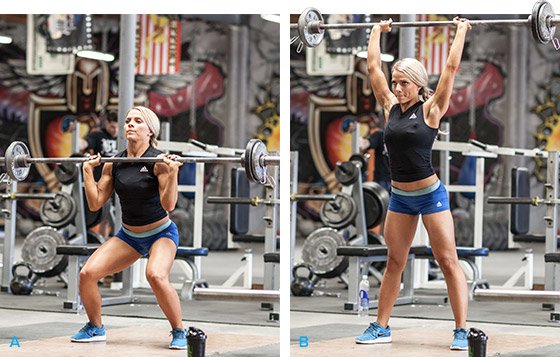
For a lot of women, this is a big deal. Your opinion of your body should be based on what it can do and achieve, not on its relationship with gravity. When you measure success by what more you can do instead of how much less you can weigh, you'll be much, much happier.
And here's the truly awesome part: When you focus on getting stronger and constantly perform a little better each time you repeat a workout, you'll still achieve those physique-carving goals; they just become incredible side effects.
Learning to love you body for what it can do instead of how it looks is freeing. You're no longer chained to that idea of perfection, and that freedom is an unbelievable feeling.
So ditch the "bikini booty" workouts and unleash your true strength.
Start getting stronger today!
I encourage you to focus solely on getting stronger for the next 6-8 weeks, at least. Make your workouts about doing a little better than you did last week by adding weight to the barbell or grabbing heavier dumbbells.
Source: http://www.bodybuilding.com/fun/4-awesome-reasons-women-should-train-for-strength.html
There's no doubt that strength training is an incredibly effective and efficient way to build a sexy, lean, healthy body that looks great in and out of your clothes.
But these great physique-carving perks are only the tip of the strength-training-benefits iceberg. So ladies, listen up. It's time to put down those little dumbbells and put the "strength" back in strength training. It's time to add more weight to the barbell and put some bigger lifts in your regimen. You're about to discover how getting stronger in the weight room can have a huge impact on your mind and body.
Here are four great reasons to make strength gains your primary training focus.
1. GETTING STRONGER INCREASES YOUR MENTAL POWER
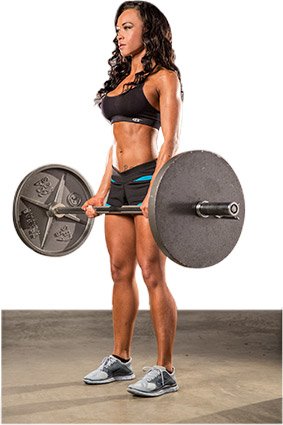
When my women clients achieve feats of strength they thought were out of reach for them—like performing their first bodyweight chin-up or deadlifting more than their bodyweight—they become noticeably more confident. They begin to carry themselves differently; and things that may have been intimidating before, no longer are. As a result, many women step out of their initial comfort zones, try new things and take more risks in and out of the gym.This is why strength training is so amazing. Pulling or pushing against the weight of an iron bar not only increases our physical strength, but our mental strength as well. It allows women to shatter self-imposed limitations and discover new capabilities.
And let's be honest: performing a flawless set of push-ups or deadlifting 1.5 times your bodyweight for the first time feels amazing. You can't help but be empowered.
This benefit alone makes lifting heavy things a priceless pursuit.
 2. GETTING STRONGER INCREASES YOUR LONG-TERM WORKOUT MOTIVATION
Strength training is not a quick fix to build a better-looking body for a single swimsuit season. It should be an activity you maintain for the rest of your life. And in my experience, focusing solely on getting stronger and improving one's performance has proven to be a phenomenal way to increase workout motivation for the long-term. Here's why:First, the goal of getting stronger is incredibly motivating. When your workouts revolve around adding more weight to the bar or performing more reps with a particular weight, you always have a specific goal for the day. Specific goals take out a lot of guesswork and make workouts and fitness programs run a lot more smoothly.
Too many people go to the gym and work out without any defined purpose. Those people are mostly worried about burning as many calories as possible and achieving a high level of fatigue. Achieving fatigue is not a worthwhile goal and makes consistent motivation damn-near impossible.
But when you know that you have to do a little bit better than you did last week, you have an enjoyable, tangible mission—one that you can actually measure and track in your workout log.
Second, when women get stronger and are able to accomplish milestones we don't think are possible, we're left wondering "Wow, what else can I do?" When that happens, the switch has been flipped. Getting bit by the strength-bug means you won't ever have to worry about feeling motivated again. You'll always want to push to see how much better you can be.
This is an incredibly powerful factor because consistently training will lead to those better-body results you're after. Even better, you'll maintain these results long-term because you'll be hooked for life!
3. GETTING STRONGER MEANS YOU'LL FOCUS ON THE WEIGHT OF THE BAR, NOT THE SCALE
If your goal is to lose body fat or just look better, you probably rely on the bathroom scale to gauge your success. As a result, you can almost become obsessed with the number glaring back at you.But something powerful happens when women ditch the scale and instead focus on the weight on the barbell . By striving to get stronger, it's much more likely you'll worry more about how much weight you're pushing, pulling, or squatting than what number you see on your bathroom scale.
For a lot of women, this is a big deal. Your opinion of your body should be based on what it can do and achieve, not on its relationship with gravity. When you measure success by what more you can do instead of how much less you can weigh, you'll be much, much happier.
And here's the truly awesome part: When you focus on getting stronger and constantly perform a little better each time you repeat a workout, you'll still achieve those physique-carving goals; they just become incredible side effects.
4. GETTING STRONGER INSTILLS PRIDE AND SELF LOVE
Many women want to look amazing, and there's not a thing wrong with that. But I think it's crucial that we start to love our bodies, not just for how they look, but for what they can do. Strength goals help you to love your body because of its physical abilities. You don't have to wait until you improve your body fat percentage; you can be proud of your body right now, at this very moment.Learning to love you body for what it can do instead of how it looks is freeing. You're no longer chained to that idea of perfection, and that freedom is an unbelievable feeling.
So ditch the "bikini booty" workouts and unleash your true strength.
Start getting stronger today!
I encourage you to focus solely on getting stronger for the next 6-8 weeks, at least. Make your workouts about doing a little better than you did last week by adding weight to the barbell or grabbing heavier dumbbells.
Source: http://www.bodybuilding.com/fun/4-awesome-reasons-women-should-train-for-strength.html
3 WAYS TO GAIN STRENGTH WITHOUT LIFTING HEAVY WEIGHTS
There's no shame in training with lighter weights. Research shows that the correct light-weight training can build strength.
Hey, you!
Yeah, you, the one struggling to hit a new personal bench press record by lifting heavy week after week. Sure, I get it. Multiple plates make anyone look like a badass, but despite trying to lift heavier and heavier, the results just don't seem to add up. Experienced trainees in particular will find it more and more challenging to hit loftier numbers.
Here's a thought: How about you stop focusing solely on moving heavy weights as a way to get stronger. Try supplementing your strength training program with the following modes of non-heavy weight training.
Speed work refers to a type of strength training which uses a much lower percentage of your maximal weight. Lifting weights with greater bar speed trains your stretch reflex and your ability to build momentum more quickly, as well as recruit more muscle fibers. This type of training benefits athletes whose sports involve generating a huge amount of force in as short a time as possible.
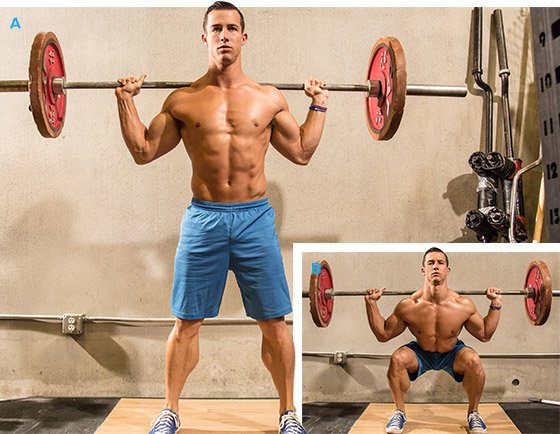
Also known as explosive strength, speed work typically involves lifting weights at 45-65 percent of your 1-rep max for 2-6 reps per set as explosively as possible. To get the most out of this speed work, you need to treat each rep as if you're pushing max effort; pick up or push the weight really, really fast or in an explosive manner on the upward motion—of a squat, for example.
Imagine you are doing speed squats. Descend quickly into the hole, pause briefly, and then shoot back up as powerfully and quickly as you can while maintaining proper squat form. Just because the weight is lighter doesn't mean you slack off on form. On the contrary, this is the best time to hone in on your technique. Since speed work hits both lower-than-max weight and reps, you'll benefit from more total sets than a typical heavyweight rep scheme, equating to a higher volume of work (typically 12 sets).
Plyometrics and Olympic lifts can also help in the same way as speed work, but it should be important to build upon your explosiveness in more relevant areas. A clean and jerk, for example, probably won't do much to build your bench press, whereas plyometric push-ups will.
Sprinting is the anabolic—or musclebuilding—form of cardio which develops your cardiovascular health, while keeping strength and muscular growth. It reduces impact by reducing running time (as compared to traditional long-distance running), but it should be extremely intense.

Sprinting should complement your training program, but not make you so fatigued that the rest of your training suffers. While you can sprint on a track, cycling can also be an option if your goal is to gain muscle mass, since it doesn't burn as many calories as running. You can get a lot of quality anaerobic work on a prowler or sled, if you have access to that special equipment.
Avoid doing cardio on the same day as a heavy lifting session (or at least not on the same day as a lift you care about), and make sure you get enough sleep and calories to maximize recovery.
You can see great benefits from one or two sessions of sprint intervals or high-intensity interval training (HIIT) each week.
3. GET MORE LEAN MUSCLE MASS
Composition refers to the ratio of your fat mass to lean mass. Ideally, you'd aim to pack the most possible muscle on your frame and get stronger for your relative size.
This is relevant because common sense says that—with all things being equal—a person with more muscle tends to be stronger than someone with less.
To this end, training in bodybuilding-style 8-12 rep schemes and reeling in a tighter line on your diet (count your macros every now and then!) could help you cut out the excess fat and maximize your strength potential per pound.
You'll still want to do a lot of work with your main lifts, but you'll also need to do isolation-style exercises to ensure maximum hypertrophy as well.
Other strength programs might rotate between heavy, speed, and bodybuilding days, while also including assistance work and cardiovascular training on off days. For best results, lifts should be tested in a variety of styles—variations on form, loading patterns, and lifts which identify muscular weaknesses—to help break through any personal weak points. An example of this is working on hamstrings to help improve squats.
Find the right balance here and you'll soon find that the only problem you have with strength training is that too many of your friends will start asking you to help move couches around.
Source: http://www.bodybuilding.com/fun/3-ways-to-gain-strength-without-lifting-heavy-weights.html
Hey, you!
Yeah, you, the one struggling to hit a new personal bench press record by lifting heavy week after week. Sure, I get it. Multiple plates make anyone look like a badass, but despite trying to lift heavier and heavier, the results just don't seem to add up. Experienced trainees in particular will find it more and more challenging to hit loftier numbers.
Here's a thought: How about you stop focusing solely on moving heavy weights as a way to get stronger. Try supplementing your strength training program with the following modes of non-heavy weight training.
1. INCORPORATE LIGHT BAR SPEED WORK
The idea of not lifting heavy may sound blasphemous, but research has shown that lifting lighter may be just as effective as going heavy and hard for building strength. This is not to say that you—especially if you're an advanced and experienced lifter—should use only baby weights from now on. Try speed work.Speed work refers to a type of strength training which uses a much lower percentage of your maximal weight. Lifting weights with greater bar speed trains your stretch reflex and your ability to build momentum more quickly, as well as recruit more muscle fibers. This type of training benefits athletes whose sports involve generating a huge amount of force in as short a time as possible.
Also known as explosive strength, speed work typically involves lifting weights at 45-65 percent of your 1-rep max for 2-6 reps per set as explosively as possible. To get the most out of this speed work, you need to treat each rep as if you're pushing max effort; pick up or push the weight really, really fast or in an explosive manner on the upward motion—of a squat, for example.
Imagine you are doing speed squats. Descend quickly into the hole, pause briefly, and then shoot back up as powerfully and quickly as you can while maintaining proper squat form. Just because the weight is lighter doesn't mean you slack off on form. On the contrary, this is the best time to hone in on your technique. Since speed work hits both lower-than-max weight and reps, you'll benefit from more total sets than a typical heavyweight rep scheme, equating to a higher volume of work (typically 12 sets).
Plyometrics and Olympic lifts can also help in the same way as speed work, but it should be important to build upon your explosiveness in more relevant areas. A clean and jerk, for example, probably won't do much to build your bench press, whereas plyometric push-ups will.
2. SPRINT YOUR WAY TO GAINS
In this context, work capacity refers to the degree in which you can or cannot maintain repeated bouts of high intensity (e.g. how many sets and reps can you take above 90 percent effort?). Improving work capacity in regard to strength training is a fancy way of saying, "Duh, do more sprint work."Sprinting is the anabolic—or musclebuilding—form of cardio which develops your cardiovascular health, while keeping strength and muscular growth. It reduces impact by reducing running time (as compared to traditional long-distance running), but it should be extremely intense.
Sprinting should complement your training program, but not make you so fatigued that the rest of your training suffers. While you can sprint on a track, cycling can also be an option if your goal is to gain muscle mass, since it doesn't burn as many calories as running. You can get a lot of quality anaerobic work on a prowler or sled, if you have access to that special equipment.
Avoid doing cardio on the same day as a heavy lifting session (or at least not on the same day as a lift you care about), and make sure you get enough sleep and calories to maximize recovery.
You can see great benefits from one or two sessions of sprint intervals or high-intensity interval training (HIIT) each week.
3. GET MORE LEAN MUSCLE MASS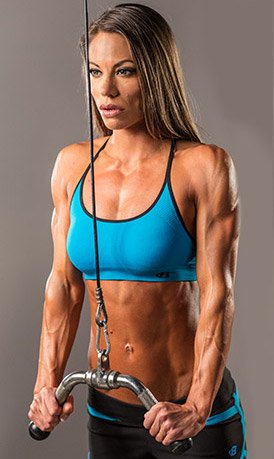
Composition refers to the ratio of your fat mass to lean mass. Ideally, you'd aim to pack the most possible muscle on your frame and get stronger for your relative size.This is relevant because common sense says that—with all things being equal—a person with more muscle tends to be stronger than someone with less.
To this end, training in bodybuilding-style 8-12 rep schemes and reeling in a tighter line on your diet (count your macros every now and then!) could help you cut out the excess fat and maximize your strength potential per pound.
You'll still want to do a lot of work with your main lifts, but you'll also need to do isolation-style exercises to ensure maximum hypertrophy as well.
PUTTING IT TOGETHER
In order to harness your full strength potential, you will need to incorporate speed work and sprints, and improve your amount of muscle per pound of body weight to help build strength. By going (and being) lighter, you can get faster and stronger.Other strength programs might rotate between heavy, speed, and bodybuilding days, while also including assistance work and cardiovascular training on off days. For best results, lifts should be tested in a variety of styles—variations on form, loading patterns, and lifts which identify muscular weaknesses—to help break through any personal weak points. An example of this is working on hamstrings to help improve squats.
Find the right balance here and you'll soon find that the only problem you have with strength training is that too many of your friends will start asking you to help move couches around.
Source: http://www.bodybuilding.com/fun/3-ways-to-gain-strength-without-lifting-heavy-weights.html
Why Strength Training May Help You Live Longer
Engaging in regular physical exercise or activities has been shown to promote good health, reduce your chances of developing many diseases, and assist you in living a longer, happier and healthier life. For the majority of older persons, “exercise” often consists jogging, walking, using an elliptical or a stair- climber, or pursuing other activities that help to elevate your heart rate and make you sweat.
However, strength training may actually have an equally if not more important role than aerobic exercise as we age. In fact, as we approach the age of 50, strength or resistance training is crucial for maintaining the ability to have an active and independent lifestyle.

It turns out the the average 30-35 year old person will experience roughly a 25 percent decline in his or her muscle strength and tone by the age of 70-75, and up to a 50 percent decline approaching the age of 90. Simply doing aerobic exercise such as walking or light treadmill workouts will not be adequate to preserve muscle tone, bone health, balance and posture. If you are not engaging in strength or resistance training, the chances are high that you will lose strength and become less functional as you age.
Strength training can involve a number of approaches including using free weights, such as dumbbells or barbells, resistance or elastic bands that allow you to flex using your arms and legs, as well as ankle weights or vests and other special exercises that use your body weight to simulate resistance against gravity.
A simple strength or resistance workout can be as little as 10-15 minutes without significant stress or strain on your joints or extremities. Paying attention to proper form, while doing the exercises slowly and consistently on a regular basis is the most important aspect of any such program. It may take 1-2 months before you start to realize the health benefits, flexibility, ease of movement and potentially less muscle aching and joint pain. Joining a gym or health club may allow you to experience a number of equipment choices; however, using books or watching videos is another valuable option.
Its important to start slow and gradually in order to prevent injuries and to discuss your workout plan with your doctor, especially if you have coronary artery disease, diabetes or any chronic lung disease. Its not unusual to experience mild muscle soreness in the first 1-2 weeks, but if you have worsening muscle soreness or pain, its important to consult your doctor.
Its clear that strength training using weight machines, free weights or resistance bands can help build and preserve muscle mass and strength. However, more important is that strong muscles maintain and produce stronger bones. Having strong bones is a key way to reduce the risk of fractures secondary to osteoporosis.
Inactivity, poor nutrition, and age-related changes, all help to reduce bone mass at the rate of approximately 1% per year after age 40. As a result, after a minor fall, our bones are more fragile and thus likely to break after minor stress or tension.
Osteoporosis, the loss of bone mass, is an important concern as we age. Osteoporosis, which is responsible for more than two million fractures year, affects nearly 10 million people in the US (8 million women, 2 million men) Hip fractures are often the most serious concern of those with osteoporosis. Most studies have shown that nearly 60 percent of people who suffer a hip fracture never completely become independent again.
Research has clearly shown that strength training can help to reduce the pace of bone loss, while some studies have demonstrated that such training can actually help to build bone. This important role is quite helpful reduce the age-related decline in bone mass. Movements and exercises that place stress on bones help to form additional calcium deposits and stimulate bone forming cells. The combination of positive stress on bone from aerobic and strength training leads to stronger, denser and more functional bone.
Strength training also has positive benefits on bone maintenance and stability that eclipse the potential benefits of aerobic weight-bearing exercise. It targets the bones of the spine, hips, wrists, and ribs, which are common sites that fracture.
Finally, resistance workouts, especially those that include exercises focusing on balance and power, play an important role to increase strength and stability. This ultimately can increase confidence and well being, helping you to remain active, and decrease the possibility of fractures due to falls.
However, strength training may actually have an equally if not more important role than aerobic exercise as we age. In fact, as we approach the age of 50, strength or resistance training is crucial for maintaining the ability to have an active and independent lifestyle.
It turns out the the average 30-35 year old person will experience roughly a 25 percent decline in his or her muscle strength and tone by the age of 70-75, and up to a 50 percent decline approaching the age of 90. Simply doing aerobic exercise such as walking or light treadmill workouts will not be adequate to preserve muscle tone, bone health, balance and posture. If you are not engaging in strength or resistance training, the chances are high that you will lose strength and become less functional as you age.
Strength training can involve a number of approaches including using free weights, such as dumbbells or barbells, resistance or elastic bands that allow you to flex using your arms and legs, as well as ankle weights or vests and other special exercises that use your body weight to simulate resistance against gravity.
A simple strength or resistance workout can be as little as 10-15 minutes without significant stress or strain on your joints or extremities. Paying attention to proper form, while doing the exercises slowly and consistently on a regular basis is the most important aspect of any such program. It may take 1-2 months before you start to realize the health benefits, flexibility, ease of movement and potentially less muscle aching and joint pain. Joining a gym or health club may allow you to experience a number of equipment choices; however, using books or watching videos is another valuable option.
Its important to start slow and gradually in order to prevent injuries and to discuss your workout plan with your doctor, especially if you have coronary artery disease, diabetes or any chronic lung disease. Its not unusual to experience mild muscle soreness in the first 1-2 weeks, but if you have worsening muscle soreness or pain, its important to consult your doctor.
Its clear that strength training using weight machines, free weights or resistance bands can help build and preserve muscle mass and strength. However, more important is that strong muscles maintain and produce stronger bones. Having strong bones is a key way to reduce the risk of fractures secondary to osteoporosis.
Inactivity, poor nutrition, and age-related changes, all help to reduce bone mass at the rate of approximately 1% per year after age 40. As a result, after a minor fall, our bones are more fragile and thus likely to break after minor stress or tension.
Osteoporosis, the loss of bone mass, is an important concern as we age. Osteoporosis, which is responsible for more than two million fractures year, affects nearly 10 million people in the US (8 million women, 2 million men) Hip fractures are often the most serious concern of those with osteoporosis. Most studies have shown that nearly 60 percent of people who suffer a hip fracture never completely become independent again.
Research has clearly shown that strength training can help to reduce the pace of bone loss, while some studies have demonstrated that such training can actually help to build bone. This important role is quite helpful reduce the age-related decline in bone mass. Movements and exercises that place stress on bones help to form additional calcium deposits and stimulate bone forming cells. The combination of positive stress on bone from aerobic and strength training leads to stronger, denser and more functional bone.
Strength training also has positive benefits on bone maintenance and stability that eclipse the potential benefits of aerobic weight-bearing exercise. It targets the bones of the spine, hips, wrists, and ribs, which are common sites that fracture.
Finally, resistance workouts, especially those that include exercises focusing on balance and power, play an important role to increase strength and stability. This ultimately can increase confidence and well being, helping you to remain active, and decrease the possibility of fractures due to falls.
Subscribe to:
Posts (Atom)
Popular Posts
-
To use rope-jumping for fitness, you need to be skilled enough to jump continuously for twenty to thirty minutes, and jumping that long and ...
-
Of no other fat-loss activity -- eating less, walking on a treadmill, doing sit-ups -- can it be said that participants eagerly count the mi...
-
Dr. Yu-Min Kuo, of the National Cheng Kung University Medical College in Taiwan, has shown how exercise helps to preserve brain function as ...
-
Some of the weight loss articles out there these days are getting a little nutty. New scientific studies that shed light on how metabolism w...
-
Aging does not cause you to lose muscles. Loss of muscle is caused by lack of exercise. You can preserve both muscle size and strength by co...

